
エルサ・ペンは、広州エコパワー新材料有限公司の石油樹脂および粘着付与剤の専門家です。炭化水素樹脂に関する深い技術経験を有しています( C5、C9 エルサは、道路標示塗料、ホットメルト接着剤、ゴム製品、シーラントの配合最適化において、世界中のクライアントをサポートしています。 LinkedIn 。


 Whatsapp us

エルサ・ペンは、広州エコパワー新材料有限公司の石油樹脂および粘着付与剤の専門家です。炭化水素樹脂に関する深い技術経験を有しています( C5、C9 エルサは、道路標示塗料、ホットメルト接着剤、ゴム製品、シーラントの配合最適化において、世界中のクライアントをサポートしています。 LinkedIn 。
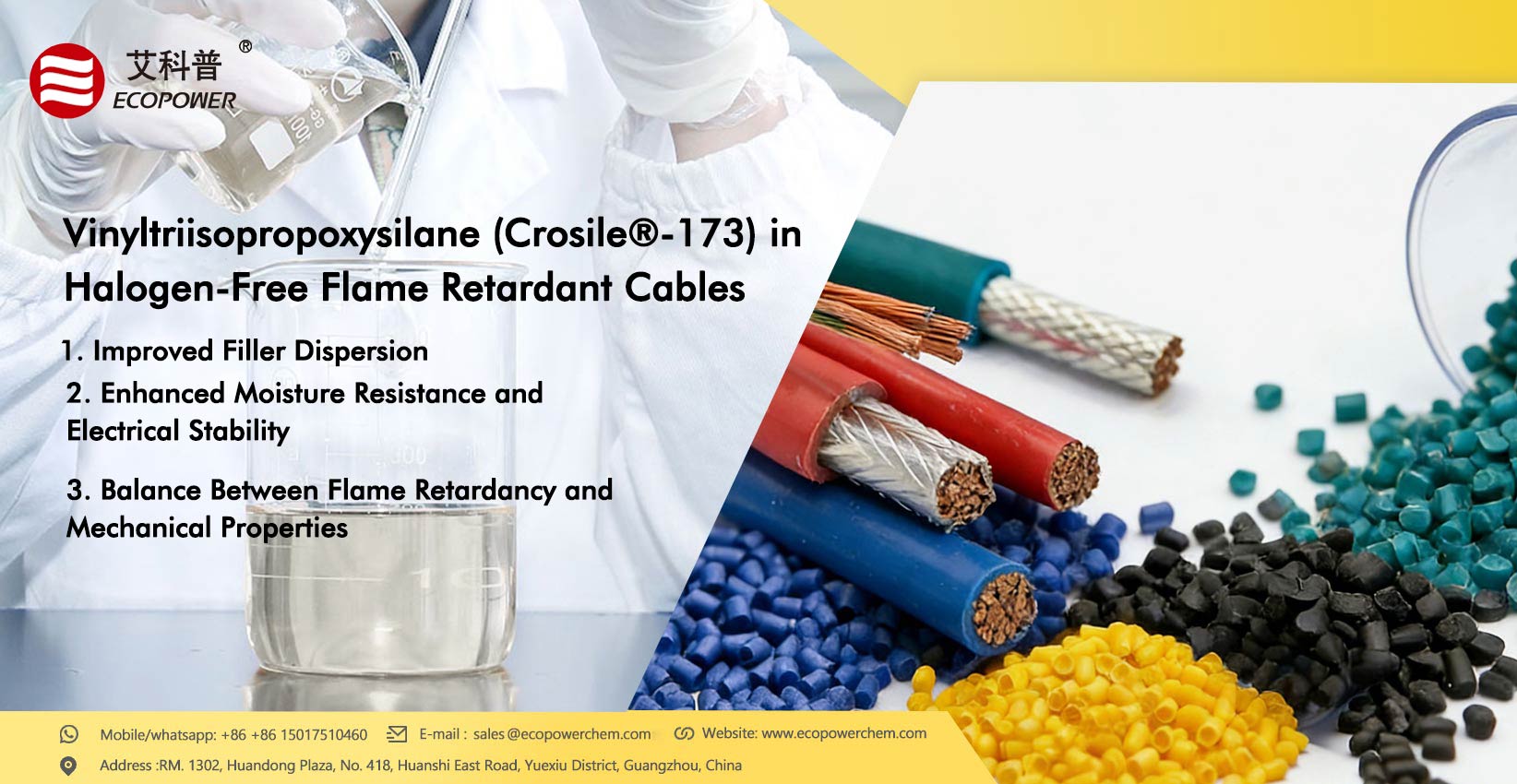
ハロゲンフリー難燃ケーブルでは、一般的に充填剤として水酸化アルミニウム(ATH)および水酸化マグネシウム(MDH)が使用されます。これらの無機粉末は表面極性が高く、ポリオレフィンマトリックスとの相溶性が低いため、凝集が発生し、機械的特性および難燃性が低下します。シランカップリング剤は、この問題を解決するためによく使用されます。
ECOPOWERのCrosile®-173(ビニルトリイソプロポキシシラン)は、その独自の加水分解挙動により、超微細粉末処理および高性能ケーブルコンパウンド分野で際立っています。
Crosile®-173には3つのイソプロポキシ基が含まれており、メトキシ基(例:Crosile®-171)やエトキシ基(例:Crosile®-151)よりも立体障害が大きくなっています。その結果、水の存在下での加水分解速度が遅くなります。充填剤表面処理において、緩やかな加水分解は以下の利点をもたらします:
Crosile®-173で処理した後、充填剤表面は疎水化され、樹脂との濡れ性が向上します。コンパウンド工程での凝集が低減され、均一な分散、より滑らかな製品表面、より安定した押出成形が実現します。
シランは充填剤と樹脂の界面で化学結合を形成し、強固な結合を作ります。湿潤環境では界面に沿った水分の浸透が抑制され、絶縁抵抗の低下が遅延します。湿熱劣化試験では、Crosile®-173で処理したケーブルは長時間の浸水後も高い体積抵抗率を維持することが示されています。
高充填量では、界面欠陥が脆化の主な原因となります。Crosile®-173のカップリング作用により、充填剤が一定の補強効果を発揮し、引張強度および破断伸びの低下を最小限に抑えます。同時に、良好に分散した充填剤は燃焼時の連続的なチャー層形成を促進し、難燃性を向上させます。
| シラン種類 | 加水分解可能な基 | 加水分解速度 | 代表的な用途 |
| Crosile®-151 | トリエトキシ 中程度 | 速い | 一般的な充填剤、中程度の水分制御 |
| Crosile®-171 | トリメトキシ | 速い | 迅速な反応が必要なシステム |
| Crosile®-172 | メトキシエトキシ | 中程度 | 151と173の中間的な特性 |
| Crosile®-173 | トリイソプロポキシ | 遅い | 超微細フィラー、均一性を必要とするシステム |
超微細フィラーの改質、活性難燃剤の製造、またはより長い加工時間を必要とするプロセスにおいて、Crosile®-173の緩やかな加水分解は、より安定した結果を確保します。
ケーブル材料以外にも、Crosile®-173は以下にも使用されています:
ビニルトリイソプロポキシシラン(Crosile®-173)は、緩やかで制御された加水分解により、高充填系における超微細無機難燃フィラーの分散性および界面に関する課題に対応します。長期的な信頼性と加工安定性が求められる高級ケーブルコンパウンドにおいて、検討に値する機能性添加剤です。
伝言を残す
WeChatにスキャン :

家
製品
接触